

10 lessons · about 42 minutes · Free
Empathy Minicourse for Teachers
A ten-part video minicourse on the empathy concepts teachers need. Lessons 1–5 explain what empathy is, how to listen actively, how to see each student as an individual, how to validate emotions, and how to look for the feelings behind behaviour.
Lessons 6–10 turn to everyday practice: responding to misbehaviour and mistakes with empathy, separating behaviour from identity, encouraging self-reflection, keeping healthy boundaries, and managing your own emotions.
Every lesson follows the same structure: a definition, why it matters, what teachers can do in practice, and examples or reflection questions. All lessons are free to watch.
Part 1: Understanding Empathy
What empathy is and how it shows up in the classroom
 4:10
4:10
Lesson 1
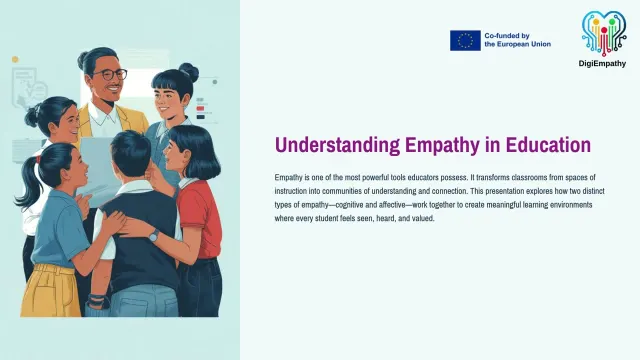
Understanding Empathy in Education
Definition of empathy and the difference between cognitive and affective empathy. Why they are important in the classroom and practical examples of how to foster both types with students.
 4:16
4:16
Lesson 2
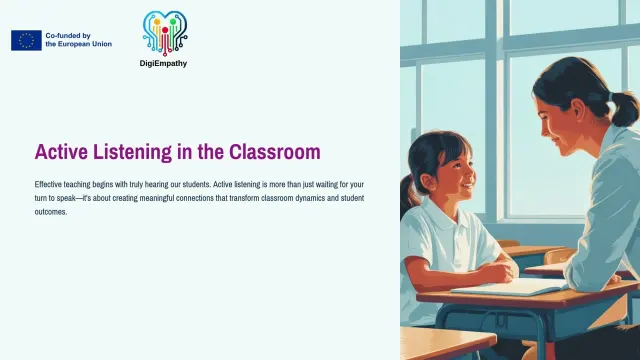
Active Listening in the Classroom
Definition of active listening, practical examples, why it is important for student-teacher relationships, and how to apply it effectively in everyday classroom interactions.
 4:33
4:33
Lesson 3
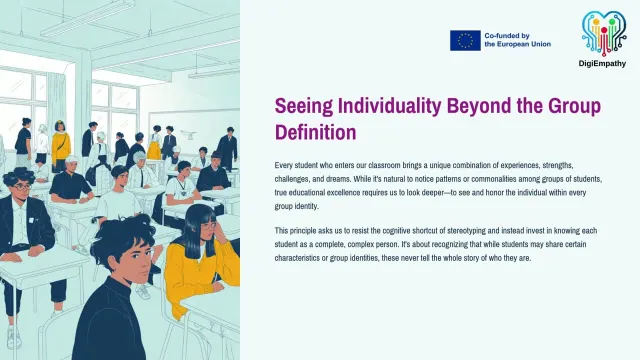
Seeing Individuality Beyond the Group
Why it is important for teachers to recognise each student as an individual rather than just a member of a group. How to do it and its benefits and challenges.
 4:28
4:28
Lesson 4
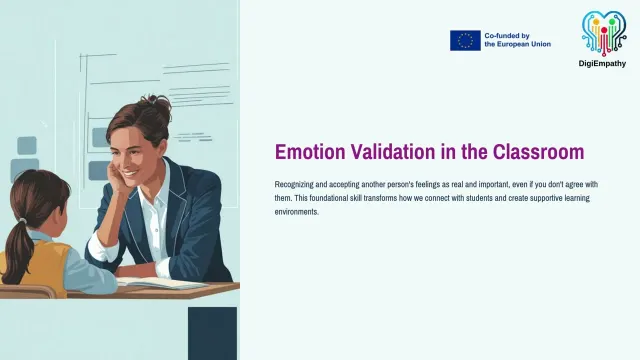
Emotion Validation in the Classroom
Definition of emotion validation, how to apply it with students, its importance for emotional safety, and concrete classroom strategies.
 4:50
4:50
Lesson 5
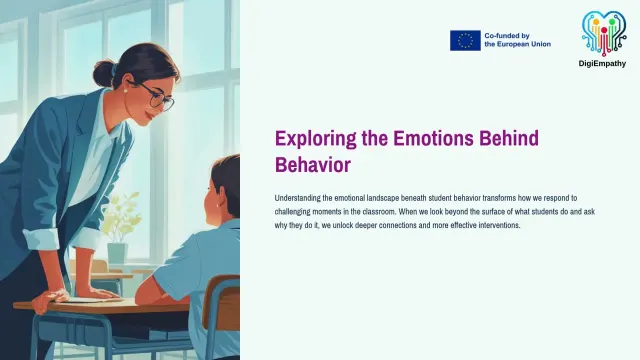
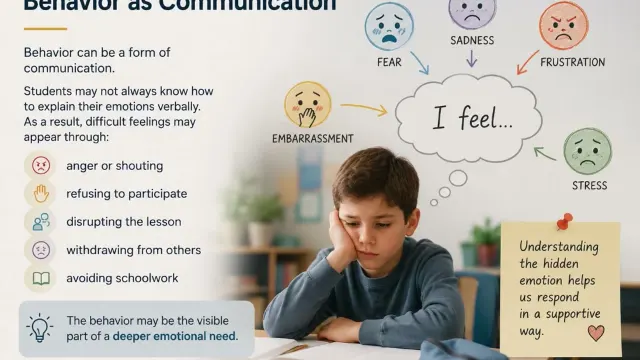
Exploring the Emotions Behind Behavior
The benefits of looking at the emotions behind each behaviour rather than the conduct itself. Its importance and how to apply this approach with students.
Part 2: Empathy in Everyday Teaching Practice
Responding to students, separating behaviour from identity, and caring for yourself
 3:10
3:10
Lesson 6
Using Empathy and Emotions in Responding to Misbehavior and Mistakes
How to respond to student misbehaviour and mistakes with empathy: staying calm, avoiding shame and labels, the pause–understand–redirect strategy, and treating mistakes as opportunities for growth.
 5:57
5:57
Lesson 7
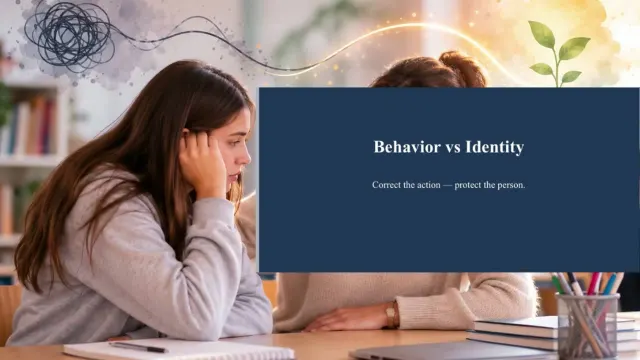
Behavior vs Identity
Why teachers should correct the behaviour and not the person: the difference between describing an action and labelling a student, and a behaviour–impact–expected change structure for feedback.
 3:39
3:39
Lesson 8
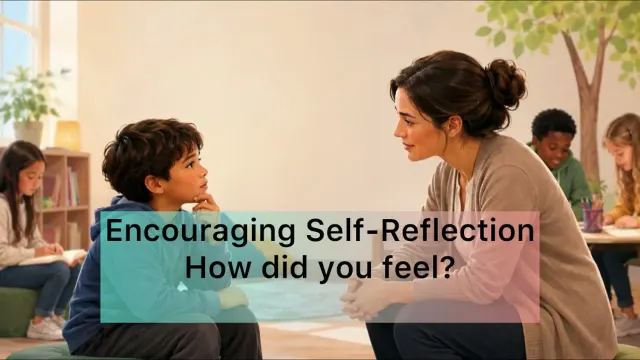
Encouraging Self-Reflection (“How did you feel?”)
How questions such as “How did you feel?” help students name their emotions, communicate calmly in conflicts and understand others, with reflection questions and classroom routines.
 3:22
3:22
Lesson 9
Empathy with Healthy Boundaries
How teachers can care about students without becoming emotionally overwhelmed: empathy versus over-identification, the risk of burnout, and listening as support.
 3:44
3:44
Lesson 10
Identifying and Managing My Own Emotions
Why a teacher's awareness of their own emotions matters for empathy, and practical ways to recognise, name and manage those emotions in the classroom.
Frequently asked questions
What is the Empathy Minicourse for Teachers?
It is a free ten-lesson video course that explains the empathy concepts teachers use in the classroom, from the definition of empathy and active listening to responding to misbehaviour, giving feedback without labels and keeping healthy boundaries. It is part of DigiEmpathy Hub, an Erasmus+ KA220 project co-funded by the European Union.
Who is the minicourse for?
It is made for teachers and other educators who work with school-age students. The lessons are also useful for trainee teachers, school counsellors and anyone who wants practical ways to bring empathy into everyday classroom communication.
Is the minicourse free?
Yes. All ten lessons are free to watch online and no account or registration is needed.
How long does the minicourse take?
The ten videos run for about 42 minutes in total. Each lesson is between three and six minutes long, so the whole course can be watched in one sitting or one lesson at a time.
What topics does the minicourse cover?
Lessons 1–5 cover understanding empathy, active listening, seeing each student as an individual, emotion validation and the emotions behind behaviour. Lessons 6–10 cover responding to misbehaviour and mistakes with empathy, behaviour versus identity, encouraging self-reflection, empathy with healthy boundaries, and identifying and managing your own emotions.
What is the difference between cognitive and affective empathy?
Cognitive empathy is understanding what another person is thinking or feeling — the analytical side. Affective empathy is feeling with the person and sharing their emotional experience. The first lesson describes cognitive empathy as the head and affective empathy as the heart, and explains why teachers need both.
Who created the lessons?
The content was developed jointly by the project partnership: organisations and schools from N. Macedonia, Greece, Portugal, Türkiye and the Czech Republic, working together under the Erasmus+ KA220 project ‘Empathy in the Digital Age’.
What language are the lessons in?
The videos are narrated in English. Most lesson pages also include a written summary, key takeaways and a full transcript.
More lesson sets
Interactive Empathy Activities for the Classroom
Practical classroom empathy activities for ages 8–12 and 13–16, recorded in real classrooms.
Digital Tools for Teaching Empathy
Six two-minute tutorials on using Animoto, Canva, Kahoot, Padlet, Pixton and Wordwall for empathy activities in the classroom, free for teachers.