





Build a solid understanding of empathy before you bring it into the classroom.
The Learn section is your starting point. It combines a structured video minicourse on the key concepts of empathy with practical tutorials on digital tools that make empathy activities more engaging for today's learners.
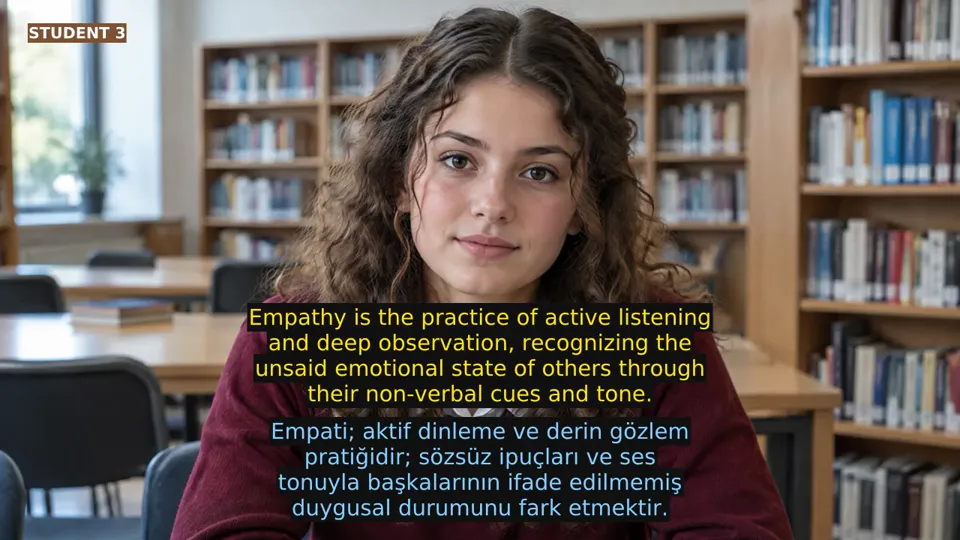
The minicourse consists of ten short video lessons (2–5 minutes each). The first part explores what empathy is and how it shows up in the classroom: the difference between cognitive and affective empathy, active listening, emotion validation, seeing each student as an individual beyond the group, and looking at the emotions behind a behaviour rather than the behaviour alone. The second part turns to the teacher's own practice: how to respond to students' mistakes in a way that models good conduct, how to separate behaviour from identity ("you acted wrongly" is not "you are bad"), how to help students reflect on their own feelings, how to empathise without losing professional distance, and how to recognise the signs that you yourself are not feeling well, because we cannot care for others if we neglect ourselves.
Every lesson follows the same clear structure: a definition, why it matters, what teachers can do in practice, and examples or reflection questions. A short quiz at the end of each lesson helps you check your understanding.
The Digital Tools tutorials show, step by step and on screen, how six popular tools (Animoto, Canva, Kahoot, Padlet, Pixton and Wordwall) can be used to create interactive empathy activities, with concrete ideas you can adapt for your own class.